Truth and Reconciliation
Milton Public Library’s Commitment to Truth and Reconciliation
Milton Public Library is committed to truth and reconciliation by incorporating Indigenous voices, stories, and knowledge into its collections and programming.
Through initiatives such as expanding Indigenous-centered materials, hosting educational events, and partnering with Mississaugas of the Credit First Nation who are Halton’s Treaty Partners, local and regional Indigenous Community members, as well as Six Nations of the Grand River, MPL strives to foster understanding, respect, and meaningful dialogue. By implementing Calls to Action from the Truth and Reconciliation Commission, the library plays a vital role in creating an inclusive space where the community can engage with Indigenous histories, cultures, and perspectives.
Land Acknowledgement:
Milton Public Library operates on treaty lands and the traditional territory of the Mississaugas of the Credit First Nation, Neutral, Huron-Wendat and Haudenosaunee people.
As we centre the truth and support reconciliation across Milton, our commitment to provide the highest quality service for all is inspired by First Peoples traditional knowledge, laws, and philosophies.
“…that land’s my home. That land’s my deepest wish, my wildest dream, the only prayer and the only temple I’m ever gonna need.”
― Richard Wagamese, Starlight

Indigenous Reading Nook
At Beaty Branch, Milton Public Library is proud to introduce the Indigenous Reading Nook, a welcoming space designed to honour and celebrate Indigenous knowledge and culture. The nook features a cozy seating area with the Garden of Relatives carpet, light therapy lamps to promote well-being, and a dedicated bookshelf showcasing a rotating selection from our Indigenous collection.
Complementing the space is a new display case, currently featuring a traditional smudge kit, which includes the four sacred medicines—sage, tobacco, sweetgrass, and cedar—along with a burning bowl, matches, a feather, and a storage case. The nook also features a curated collection of Indigenous literature and cultural artifacts from the Woodland Cultural Centre, along with original artwork created by Brent Beauchamp to further celebrate Indigenous stories, art, and history within the community.
MPL has introduced two light therapy lamps at it’s Beaty branch in the Indigenous Reading Nook. They are free to use on first-come, first-serve basis. During the winter months, when days are shorter and it gets dark early, library patrons can enjoy the benefit of these therapy lamps. The therapy light lamps are designed to imitate spring and summer light, which is helpful in the treatment of Seasonal Affective Disorder (SAD), also known as “winter blues”. They are useful when sitting in front of them for reading, working and relaxing for about 20–30 minutes daily.
What is Light therapy Lamp?
In Canada, the fall and winter can have little sunshine, and this can change how we feel. Changes in mood can make you feel more tired, annoyed, and have trouble sleeping. Light therapy lamps can help lessen these effects by copying the natural sunlight we get in spring and summer.
The Canadian Mental Health Association confirms this type of light can help improve your mood and reduce feelings of sadness in winter.
How does it work?
A light therapy lamp gives 10,000 lux of soft, UV-free, full-spectrum light when you are up to 12 inches away from it and is more beneficial if using daily during darker days.
Instructions for using light therapy lamp.
- Sit about 12 inches to two feet away from the lamp.
- Turn on the lamp; do not stare directly into the light.
- Move the lamp to suit your position.
- Read, work or relax facing the lamp for 20 to 30 minutes.
- Turn off the lamp when done.
Light therapy safety and physician approval
Light therapy is usually safe, but it may not be suitable for everyone. MPL is not responsible for any health problems caused by using the light therapy lamp.
Please talk to your physician before starting light therapy, especially if:
- You have a skin condition that makes it very sensitive to light.
- You are taking medicines that make you more sensitive to sunlight. This includes some antibiotics, anti-inflammatory drugs, some chemotherapy drugs or skin creams etc.
- You have a vision problem that makes your eyes more sensitive to light.
You have bipolar disorder or any other type of mood problem.
Honouring Indigenous Voices
Milton Public Library proudly celebrates Indigenous authors, artists, and Elders through meaningful programs and initiatives designed to foster cross-cultural learning and understanding. Some highlights of these efforts include:
This hands-on, experiential workshop provided staff and community with an opportunity to explore Canada’s history of colonization and its lasting impact on Indigenous peoples. The Blanket Exercise encouraged reflection on the relationships between Indigenous and non-Indigenous communities and the steps needed to rebuild them.
Children shared their thoughts on reconciliation by writing meaningful messages on leaf cutouts, which were displayed prominently at all library branches. This initiative served as a visual reminder of the collective commitment to truth and reconciliation.
Each MPL branch displayed the Survivors’ Flag to honor residential school Survivors and recognize the enduring impacts of the residential school system in Canada. The flags symbolized remembrance, resilience, and the importance of reconciliation.
Learn more about the survivor flag here.
Milton Public Library now has a smudge kit and traditional medicines available for ceremonial use, respectfully procured through members of the local Indigenous community. These resources are offered to support cultural practices, honour Indigenous traditions, and create a welcoming space for all. A kit is on display at the Beaty Branch.
Library staff have received training on the respectful preparation and presentation of a tobacco tie, ensuring the practice is carried out with cultural accuracy and care. Staff have also learned about the significance and proper use of Indigenous foods, such as the Three Sisters and strawberries—to support ceremonies and educational programming in a meaningful and authentic way.
MPL staff have undergone a number of training sessions, seminars, and conferences, including the 4 Seasons of Reconciliation training offered by Reconciliation Education and visiting the Woodland Cultural Centre—an important site of education and remembrance—to further explore the histories, languages, and lived experiences of Indigenous Peoples in our local region. This training has deepened our understanding of Indigenous histories and cultures and supports our ongoing efforts to decolonize library services and spaces.
Each season, MPL opens the Medicine Learning Garden with knowledge sharing and blessings from Indigenous Elders, marking the start of a season of growth and learning. The garden’s closing ceremony celebrates the harvest and the community’s shared experiences. Both instances offer a time to celebrate the many efforts of MPL volunteers and Indigenous partners in maintaining the garden for the community to enjoy.
The Milton Public Library offers a unique outdoor reading experience, combining nature and literacy through its story walks. Current and upcoming Indigenous story walks include: Biindigen! Amik Says Welcome by Nancy Cooper and The Animal People Choose a Leader by Richard Wagamese.
MPL observes Indigenous Veterans Day each year (November 8) through ceremony, reflection, and the sharing of stories from community members who help preserve and honour the experiences of Indigenous veterans and currently serving military members. The day recognizes the contributions, sacrifices, and resilience of First Nations, Inuit, and Métis peoples. As part of this commemoration, MPL commissioned the creation of a beaded poppy wreath made by local teens under the guidance of a respected community grandmother.
Explore our programs this September featuring a vast array of programs for all ages to educate and celebrate Indigenous culture.
Features Carousel
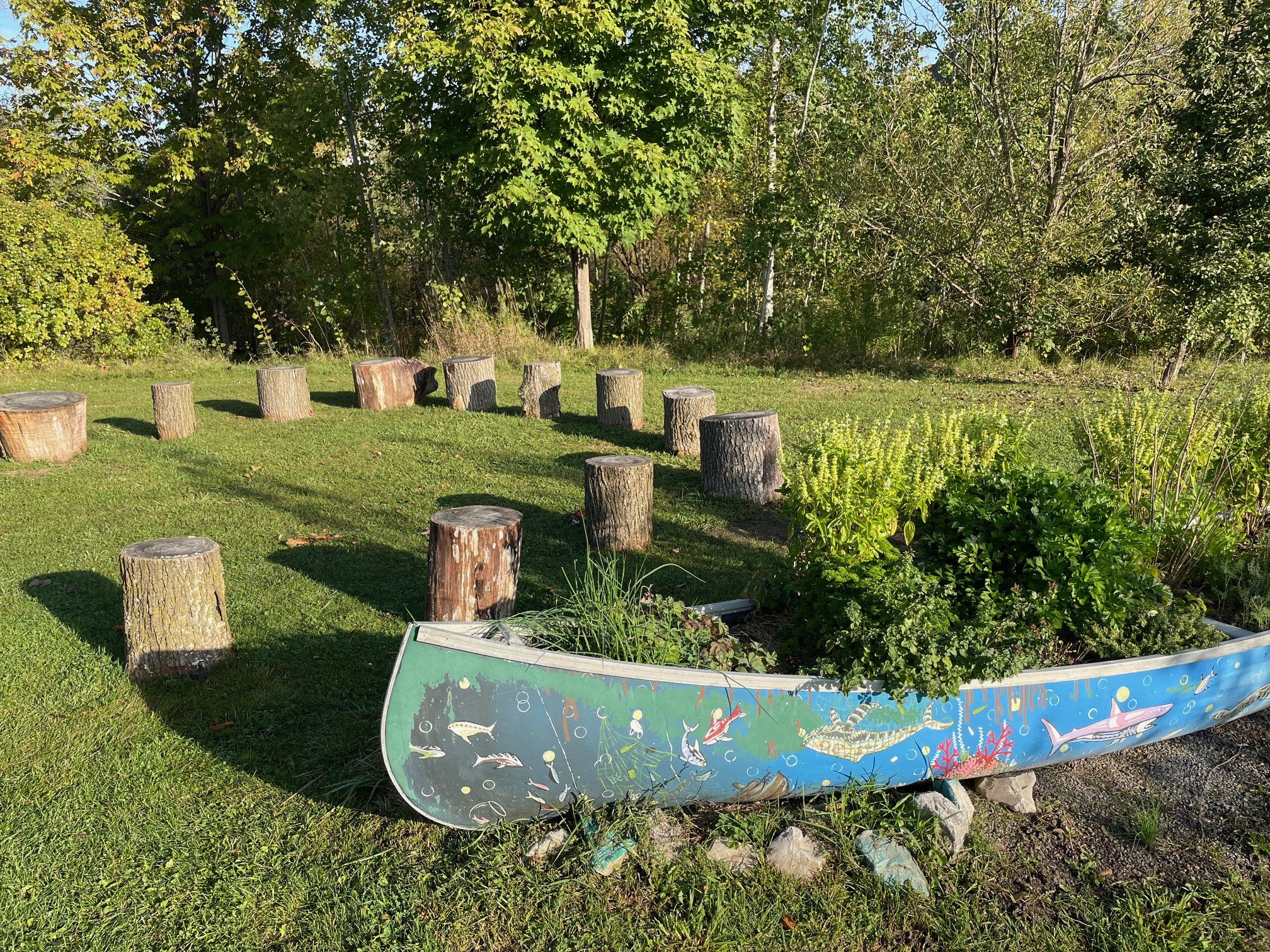
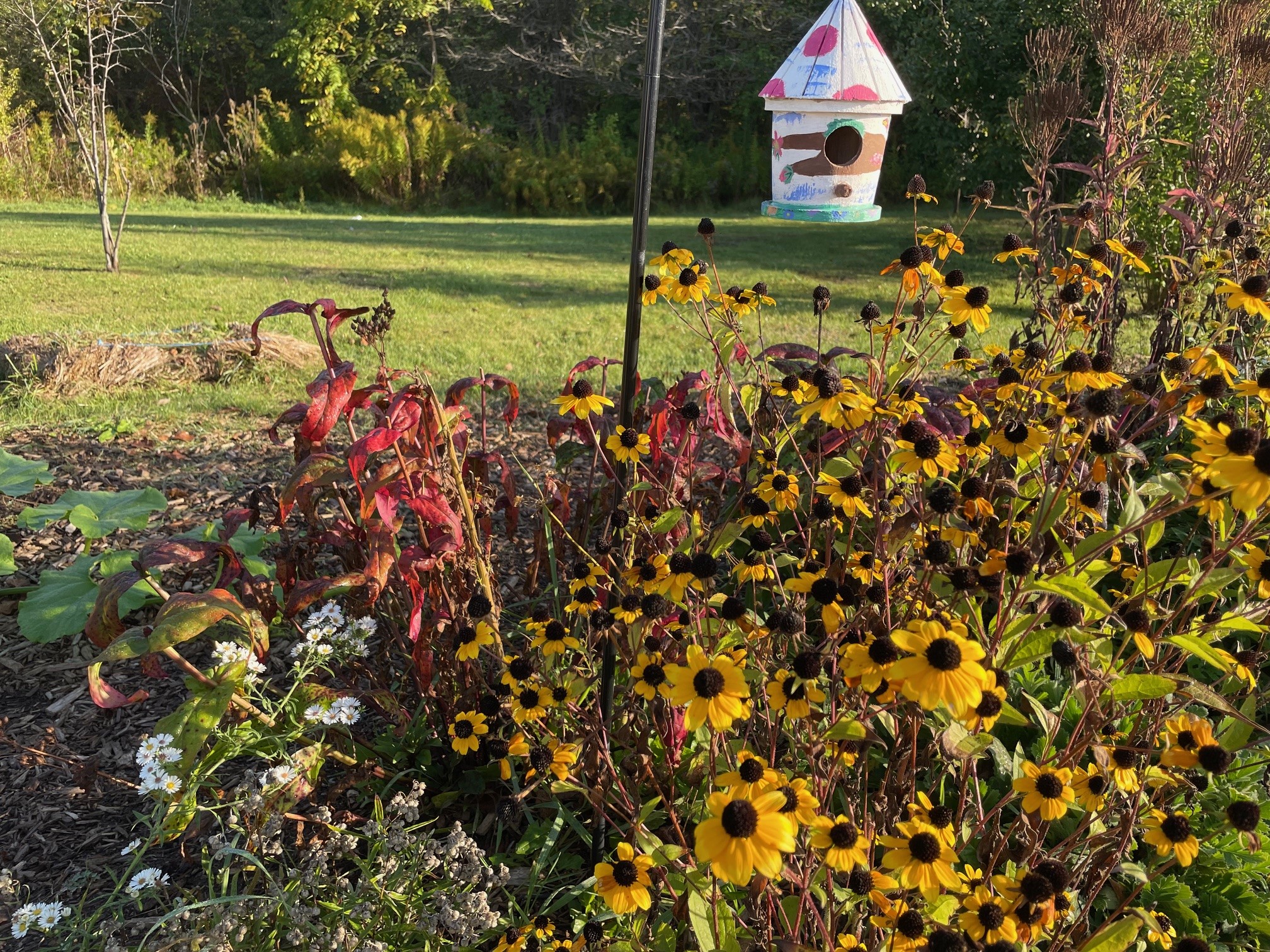
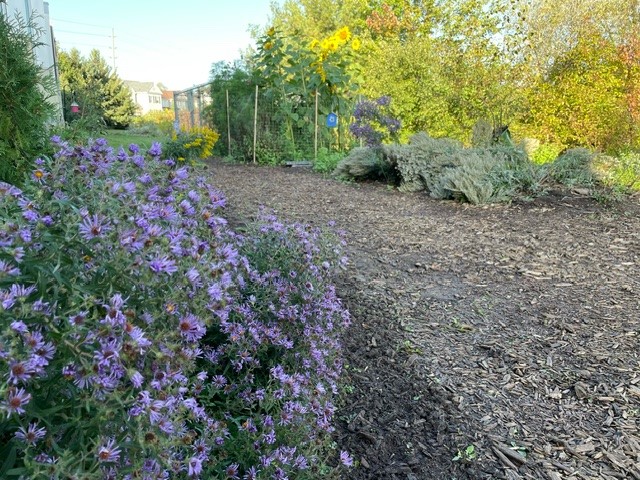
Medicine Learning Garden at Beaty
Milton Public Library was the proud recipient of a $50,000 grant from the Government of Canada’s Healthy Communities Initiative. Partnering with local Indigenous organizations Grandmother’s Voice and Miinikaan, the introduction of the Garden brought new life to the Beaty Branch and inspires a more inclusive and vibrant community space centered around the Indigenous ways of knowing about the land, plants, and medicines.
A Medicine Learning Garden was introduced at the Beaty Branch in 2022. The community is welcome to explore the garden throughout the year, though the garden officially opens each year in May and closes in October. Visit the Medicine Learning Garden page for more information.
Indigenous Bee by Brent Beauchamp
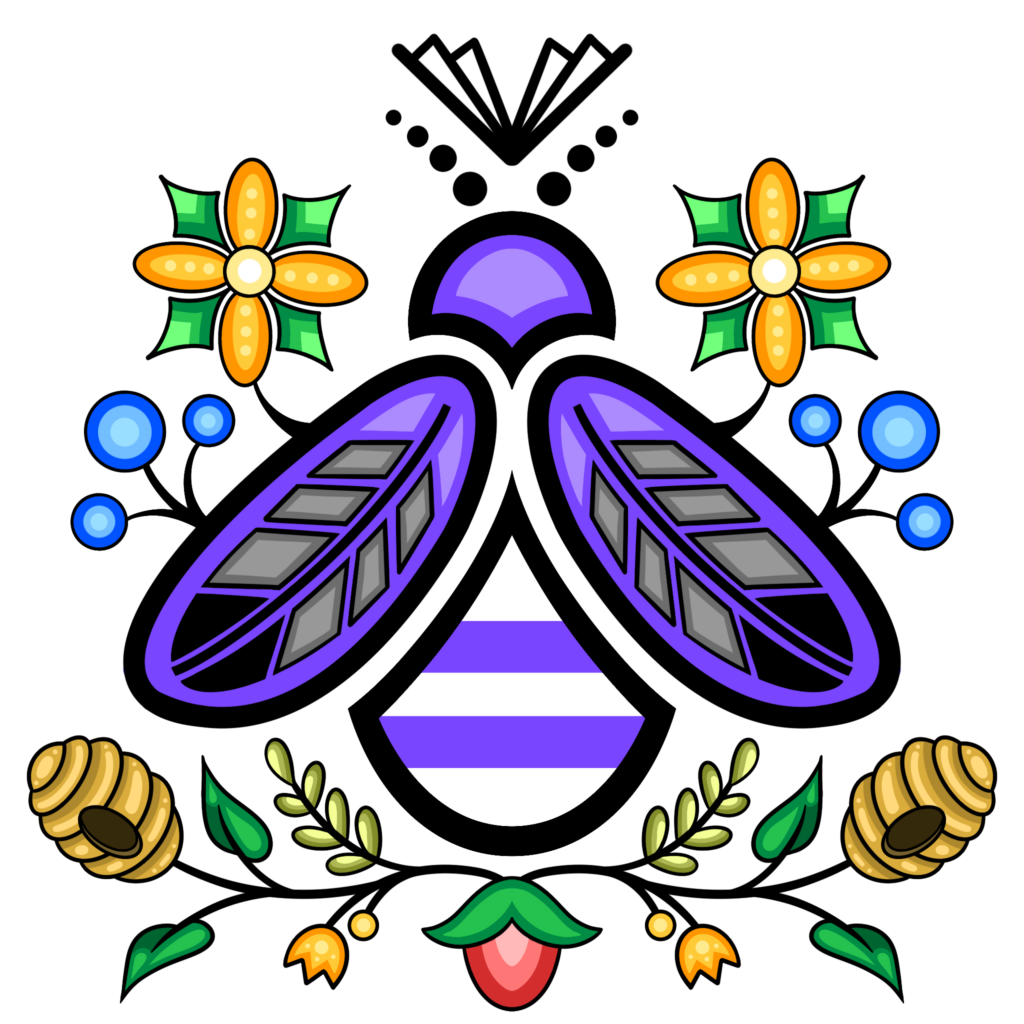
We worked in partnership with Haudenosaunee & Anishinaabe-born artist Brent Beauchamp to design an alternative bee logo, featuring The Two Row Wampum Belt, plants, and medicines.
Two Row Wampum Belt
Incorporating the two purple lines on the bee’s body signifies The Two Row Wampum Belt.
The Two Row Wampum Belt is a 1613 treaty between the Haudenosaunee Confederacy and the Dutch, symbolizing coexistence and mutual respect. The two parallel rows on the wampum belt represent separate paths for the two nations (a canoe for the Haudenosaunee, a ship for the Dutch) traveling the same river of life, without interference.
Today, the treaty represents how different communities can co-exist in peace, friendship, and mutual respect for one another’s culture and way of life.
Plants & Medicines
The floral design surrounding the bee signifies the plants and in other words our traditional ‘medicines’. The bee plays a crucial role by pollinating our plants helping with fertilization and reproduction.
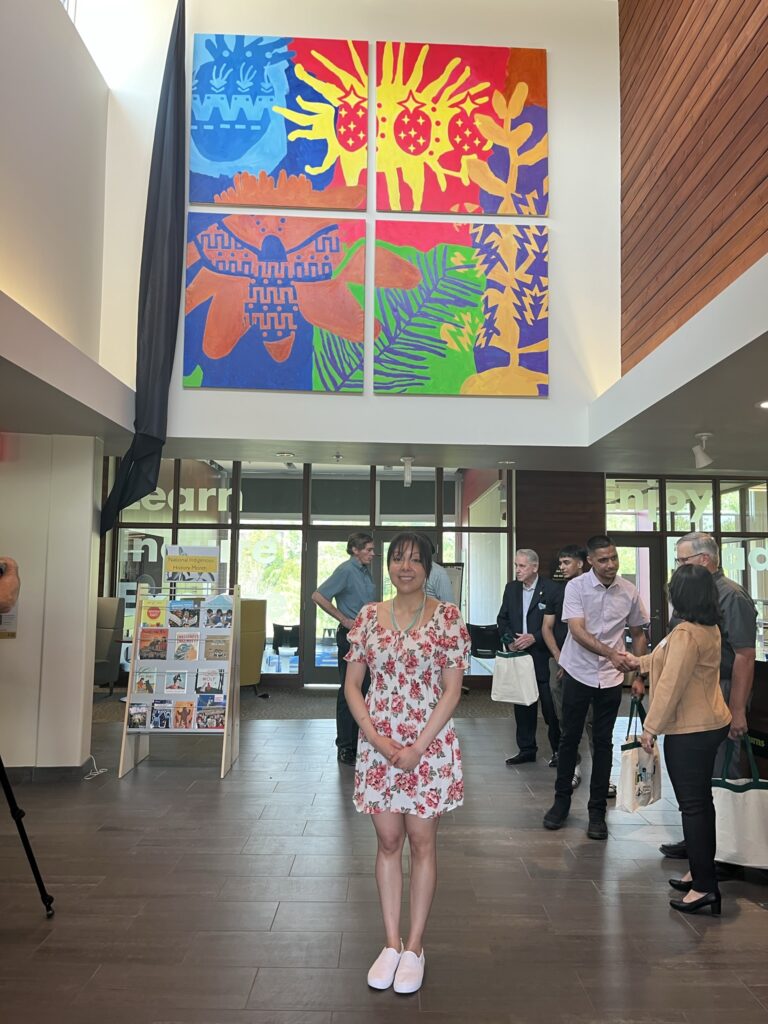
‘Medicines’ Mural Painting by Cassandra Bomberry
On June 1st, 2023, in celebration of National Indigenous History Month, Milton Public Library unveiled ‘Medicines’, a beautiful four-panel mural painted by local Indigenous artist Cassandra Bomberry. The mural is located in the entrance atrium at the Beaty Branch.
“‘Medicines’ is inspired by the medicines planted in the library’s garden and the plants surrounding the area. Growing up, I was thankful to be surrounded by nature and grateful for its power to uplift my spirts. I wanted this mural to create that same sense of positivity and wellbeing for the visitors of this library. In the same way books can educate us, the natural world has an abundance of knowledge for us to learn from. I hope to honour nature with this painting and remind us of the important relationship we have with the natural world.”
– Cassandra Bomberry
Indigenous Collection
Milton Public Library is proud to offer an extensive Indigenous collection that highlights the voices and stories of Indigenous authors, artists, and Elders. This collection includes physical books and eResources, reflecting Indigenous knowledge, culture, and history. It has been thoughtfully curated to support reconciliation, inspire learning, and foster cross-cultural understanding.
Milton Public Library purchases its Indigenous collection from GoodMinds, a First Nations-owned bookstore specializing in Indigenous educational resources. Staff have also visited GoodMinds to deepen their understanding of Indigenous perspectives and to thoughtfully select materials. Purchasing from GoodMinds supports Indigenous-owned businesses and ensures our collection includes authentic voices, histories, and knowledge—providing our community with access to accurate, diverse, and respectful perspectives.
Visit the Collection to explore stories that honor tradition, truth, and resilience.
One Book, One Milton 2024
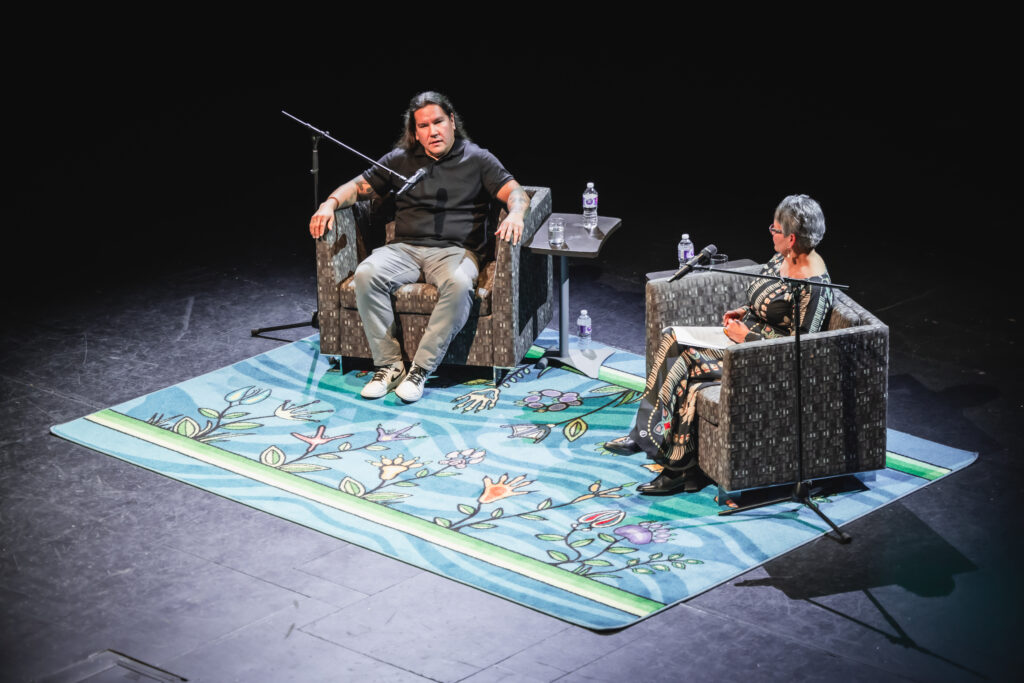
For the first time, Milton Public Library was proud to feature Waubgeshig Rice, an Indigenous author from Ontario, for its annual One Book, One Milton 2024 event.
With OBOM, MPL encourages the entire community to come together by reading a single book, fostering shared experiences and meaningful conversations. With the selection of Moon of the Turning Leaves by an acclaimed Indigenous author, MPL aimed to shine a spotlight on Indigenous culture and literature.